Where do dreams go when they disappear?
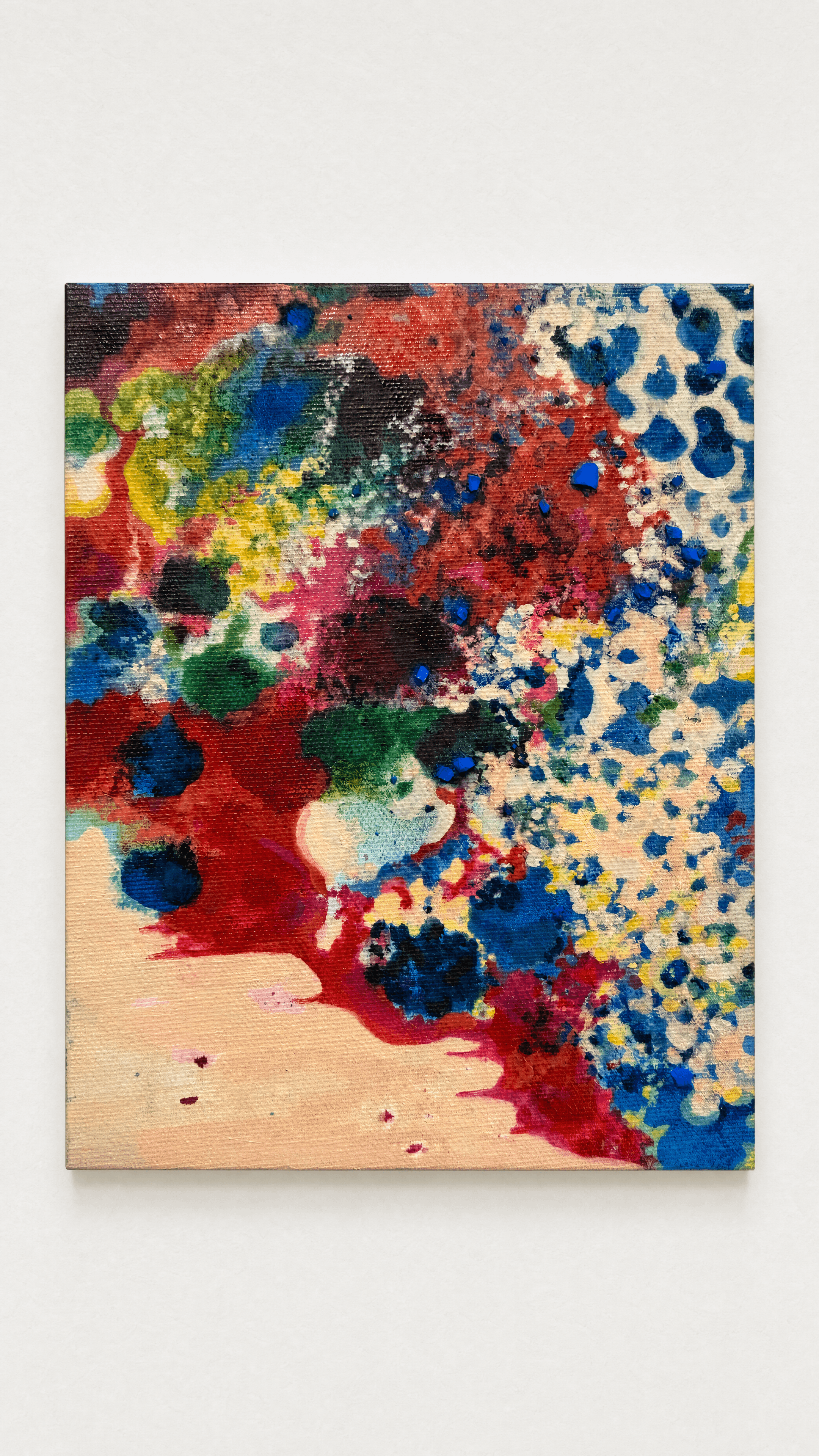
Acrylic, pigment, and oil on canvas, 30,5 cm x 25,5 cm, 2026.


A few words
This painting emerged from an experiment with new materials. I began by preparing the canvas with alcohol ink, water and acrylic medium, before working over the surface with pigment and oil paint. I think of the process as unfolding in two stages. The first is intuitive and open: I play with the paint, observing how it behaves when it encounters water and other pigments. In this phase, I feel almost like an external observer witnessing a chemical process—a dance between materials that I can initiate but never entirely control. The second stage becomes a conversation. I respond to the images, colours and gestures that have emerged, adding to them and observing how they react to and transform one another.
The finished image evokes a sky or a sea reflecting colour—an atmosphere suspended between the two. Yet the intensity of the colours led me to imagine a parallel sky: a physical place to which dreams might travel. The title was inspired by a line from Tessa McWatt’s The Snag: A Mother, a Forest and Wild Grief. Reflecting on her mother’s dementia, McWatt asks: “Where do memories go when they disappear?”
This question made me consider how memories and dreams—both those we experience while sleeping and those we carry while awake—seem to possess a peculiar materiality. At times, they feel vivid, substantial and almost tangible, despite having no physical form. Yet, as time passes, certain dreams fade just as memories do. The painting imagines a space for these vanished but once deeply felt things: a parallel atmosphere in which they might continue to exist after they have disappeared from us.